


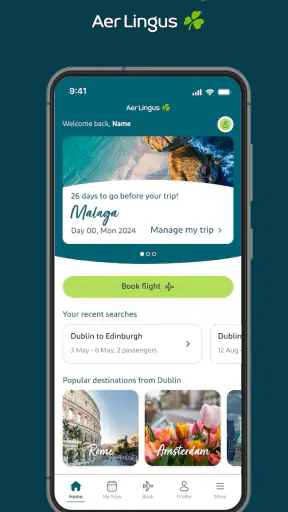
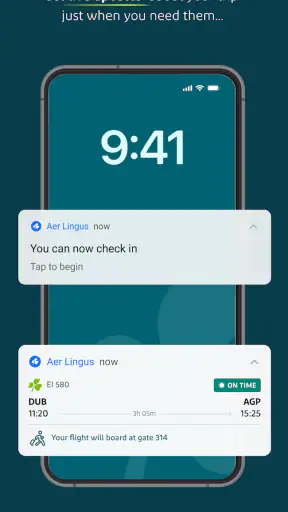
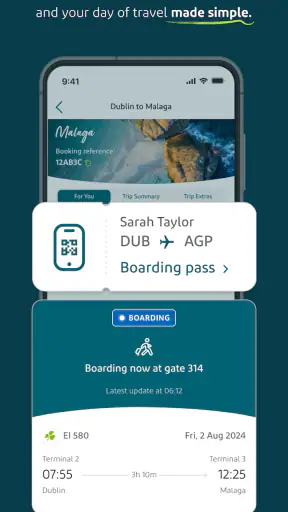

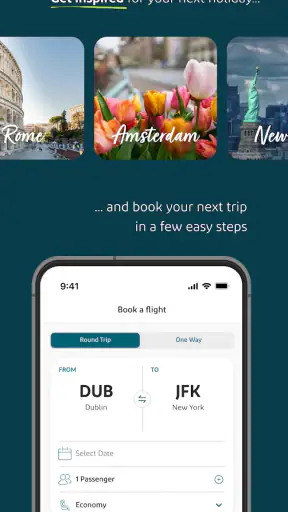
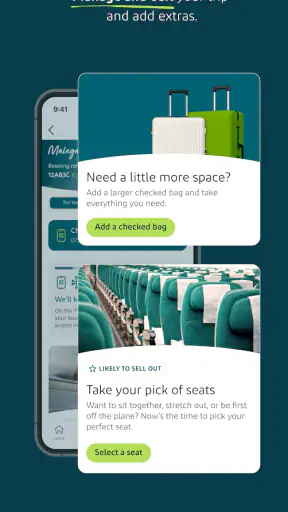
When I travel with Aer Lingus, I want the basic flight tasks in one place rather than scattered between browser tabs, confirmation emails, and airport screens. That is the practical promise of the Aer Lingus App: it is a free Travel & Local app from Aer Lingus for searching, booking, and managing flights. I tested it with that narrow goal in mind, and my overall impression is that it works best as a focused companion for people who already expect to fly with this airline.
The app is not trying to replace every travel tool on a phone. It is most useful when the airline itself is the center of the trip. Instead of opening a general flight-search service for every possible carrier, I can use Aer Lingus’s own mobile route into the booking and trip-management process. That difference sounds small, but it matters when I am checking a reservation close to departure or trying to avoid switching between several services.
Its reception is strong: the app carries a 4.7 average from around 39 thousand ratings and has passed one million installs. Those figures do not guarantee a perfect experience on every phone, but they do suggest that the basic workflow is dependable for a large audience. The age classification is Everyone, so it is presented as suitable for a broad range of users rather than a specialist aviation audience.
One airline app, one central travel task
The capability I found most important is managing an Aer Lingus flight from the same place where I search or book it. That is more valuable than simply having another way to view a timetable. A flight booking is not finished when payment or confirmation is complete; plans change, details need checking, and the information becomes especially important as the journey gets closer.
Using the app keeps the airline-specific part of the trip together. I can begin by looking for a flight, continue into the booking process, and return later when I need to deal with that reservation. The benefit is not that the app magically simplifies air travel. The benefit is that it reduces the number of places where I have to look for the same journey.
I would describe this as a control-and-continuity advantage. A general travel app may be better for comparing many airlines, flexible dates, or broad destination options. Once I have chosen Aer Lingus, however, the airline’s own app is the more natural place to continue. It is designed around that carrier’s booking relationship rather than around a marketplace view of the whole industry.
That distinction also explains why I would not install it merely because I take occasional flights. If Aer Lingus is not involved in the trip, the app has no reason to be part of my planning. Even when it is involved, travelers who prefer a single cross-airline organizer may still find a general travel service more convenient for their overall itinerary.
What the workflow feels like
In practice, I treat the app as a three-stage tool. Before committing to a trip, I use it to search and assess the available Aer Lingus booking path. After booking, I return to manage that specific journey. Near travel time, I use it as a quick reference point instead of relying only on an email or remembering which browser page contains the reservation.
The useful habit is to open the app before I actually need it. I would check that the relevant booking is visible, confirm that I am looking at the correct trip, and make sure I know where the management controls are. Doing this at home is less stressful than learning the layout while standing in an airport queue with limited attention.
I also prefer using the app for a deliberate check rather than repeatedly refreshing it out of nervousness. The phone is good at putting the airline’s service within reach, but it cannot remove the uncertainty that comes with delays, changing plans, or airport congestion. Its value comes from access and organization, not from replacing sensible travel preparation.
A realistic example is a short visit planned around a particular event. I search for the Aer Lingus flight that fits my schedule, complete the booking, and later open the same app when I want to review the trip. On the morning of departure, I would rather start with the airline’s own application than search through old messages for the correct confirmation. That small reduction in friction is where the app earns its place.
How I would use it before and after booking
Before booking, I would use the app when I have already narrowed my choice to Aer Lingus. That is the key trade-off. A comparison service may show a wider field, while this app gives me a direct airline-focused route. If my priority is discovering every possible carrier, I would begin elsewhere and move here only once Aer Lingus becomes a serious option.
After booking, I would keep the application available because management is often more important than the initial search. Travel plans are not static: dates, timing, companions, and personal arrangements can make a previously simple reservation feel urgent. Having the airline’s own app ready means I do not need to reconstruct the booking journey from memory.
One practical tip is to separate planning from last-minute problem solving. I would use the app calmly at home to understand the reservation, then use it quickly at the airport for the task at hand. That approach makes the interface feel less like a discovery exercise and more like a familiar travel tool. It also helps me notice any issue early, when I still have time to look for a solution.
Another useful habit is to keep a backup record of important travel details outside the app. I would not rely on any single application as my only source of information during a journey. The Aer Lingus app can be the convenient main reference, but a traveler should still retain essential confirmation information in a way that remains accessible if the phone battery, connection, or application session becomes inconvenient.
The strongest everyday scenario
The app makes the most sense for someone who flies Aer Lingus often enough to recognize the value of a dedicated airline channel. A business traveler with recurring routes, a family arranging a holiday, or a passenger returning to an existing booking can all benefit from having the carrier’s search and management tools close at hand.
For a family, the main advantage is concentration. I would rather check the relevant Aer Lingus trip in one airline-specific place than ask another family member to search through several emails while I am handling luggage or directions. The app does not remove the need to coordinate people, but it can make the reservation itself easier to locate and revisit.
For a business traveler, the value is speed. If I already know the airline I want, opening a dedicated app can be more direct than entering a general travel site, filtering results, and then moving into a separate airline process. That advantage becomes clearer when I am repeating a familiar type of journey rather than researching a completely new destination.
For an occasional passenger, the benefit is more modest but still real. I might install it for one Aer Lingus trip, use it to keep the booking accessible, and remove it afterward if I do not expect another journey soon. Since the app is free, the decision is mainly about usefulness and phone space rather than an additional purchase.
Where the dedicated approach falls short
The same focus that makes the app convenient can make it less suitable for broad travel planning. It is an Aer Lingus tool, not a neutral overview of every airline. If I am choosing between several carriers based on price, departure time, connections, or baggage arrangements, I would want a comparison service involved before settling on this app.
There is also a mental cost to using airline-specific applications. A traveler with several carriers in one itinerary may end up with multiple apps, each offering its own account flow and trip view. In that situation, a general itinerary organizer can be easier for seeing the whole journey, even if the airline’s own app remains useful for the Aer Lingus segment.
I would also avoid judging the app solely by how easy the initial booking feels. The more important test is whether I can return to the correct reservation without hesitation. If I am booking for someone else, managing more than one trip, or switching between personal and work travel, I need to pay attention to which journey is open. The app can centralize information, but I still have to use that centralization carefully.
Another limitation is psychological rather than technical: keeping a flight app on my phone can encourage me to check travel details too often. I find it more helpful when I give it a clear job—search, book, or manage—rather than treating it as a constant source of reassurance. The application supports preparation; it does not make every travel uncertainty disappear.
What the app’s history and current release suggest
Aer Lingus released the app on February 2, 2016, and the current version is 26.4.1. That long presence matters to me because this is not a newly assembled experiment that I would expect to change dramatically from one week to the next. It has had time to become an established mobile route for the airline’s customers.
The minimum operating-system requirement is Android 7.0. For many current phones, that should not be a difficult requirement, but anyone using an older Android device should check compatibility before depending on the app for a trip. I would do that check well before departure, not while already traveling.
The version number itself is not a reason to assume that every screen will feel identical across devices. Mobile applications can behave differently depending on operating system, screen size, connection quality, and the state of a booking. My advice is practical: install it early, open it, and test the part of the journey you expect to use. That is a better preparation step than assuming an app will behave perfectly at the busiest moment.
Questions I would ask before installing
“Is it worth using if I have not booked yet?” I would say yes when Aer Lingus is already one of my likely choices. The app gives me a direct airline-focused starting point, but it should not be my only research tool if I am comparing the entire market. I would compare broadly first when flexibility matters, then use the Aer Lingus app for the carrier-specific part.
“Can it replace my usual travel organizer?” Not completely, in my view. It is best for the Aer Lingus booking and its management rather than for presenting every part of a complicated multi-airline itinerary. I would keep a broader organizer or personal travel notes for trains, hotels, transfers, and other carriers, while using this app for the airline segment.
“Should I wait until the airport to install it?” I would not. Installing it before the trip gives me time to sign in or locate the reservation, understand the layout, and deal with any unexpected friction while I still have a stable connection and enough time. The airport is the wrong place to discover that I do not remember the booking details needed to continue.
“Is it suitable for a family member who is not confident with technology?” Generally, the focused purpose helps. The app is not overloaded with unrelated travel content, and the Everyone age classification makes it broadly approachable. Still, I would set it up together and explain the specific path for the relevant booking rather than assuming that a first-time user will know where to go under pressure.
“Who should skip it?” I would skip it if I rarely or never fly Aer Lingus, if I only want a universal flight comparison tool, or if I strongly prefer managing every airline through one independent service. In those cases, the dedicated focus becomes unnecessary rather than helpful.
Who gets the most value
The best audience is someone whose trip is already tied to Aer Lingus and who wants a direct way to search, book, and manage that airline’s flights. The app is especially sensible for repeat passengers, travelers arranging a defined Aer Lingus journey, and people who prefer having the airline’s own service available on their phone.
I would recommend it to a friend with one qualification: use it as the airline companion, not as the entire travel strategy. Start with a wider comparison when you need to explore alternatives. Once Aer Lingus is the right fit, the app becomes more useful because its narrow purpose matches the decision you have made.
Its free price removes the biggest barrier to trying it, and the established user base gives me confidence that it is a serious part of Aer Lingus’s mobile experience. Still, convenience depends on preparation. Install it before departure, locate the right trip, and keep a backup of essential details rather than expecting one app to solve every travel problem.
My final view is positive because the app understands its job. I value it less as a general travel discovery tool and more as a reliable bridge between choosing an Aer Lingus flight and dealing with that flight afterward. If Aer Lingus is part of your journey, this is the kind of focused app that can save time at exactly the moments when travel administration becomes annoying. If your needs are broader than one airline, I would pair it with a comparison or itinerary service instead of asking it to do a job it was not designed to handle.


